
Keep hospital IT + devices
running without more tickets
One place to call. Inquira captures context fast, routes to the right support department and drafts ticket-ready notes so teams restore service quicker.
See how Inquira triages IT + medical-device requests and produces audit-ready documentation.
Faster restores. Fewer interruptions.
Hospitals run on many systems and thousands of connected devices. When things break, care slows down.
Medical device sprawl
10–15 per bed
Connected medical devices monitored per hospital bed (average)
Too many logins
Up to 15 systems
Some NHS staff log into as many as 15 different systems
Care impacted by disruption
74%
Hospitals reporting direct patient care impact during the Change Healthcare disruption
The next generation of patient engagement

Here's how you get started
1.Give Inquira your call script and start chatting with our AI to customise it until you are happy. The same as hiring a new employee.
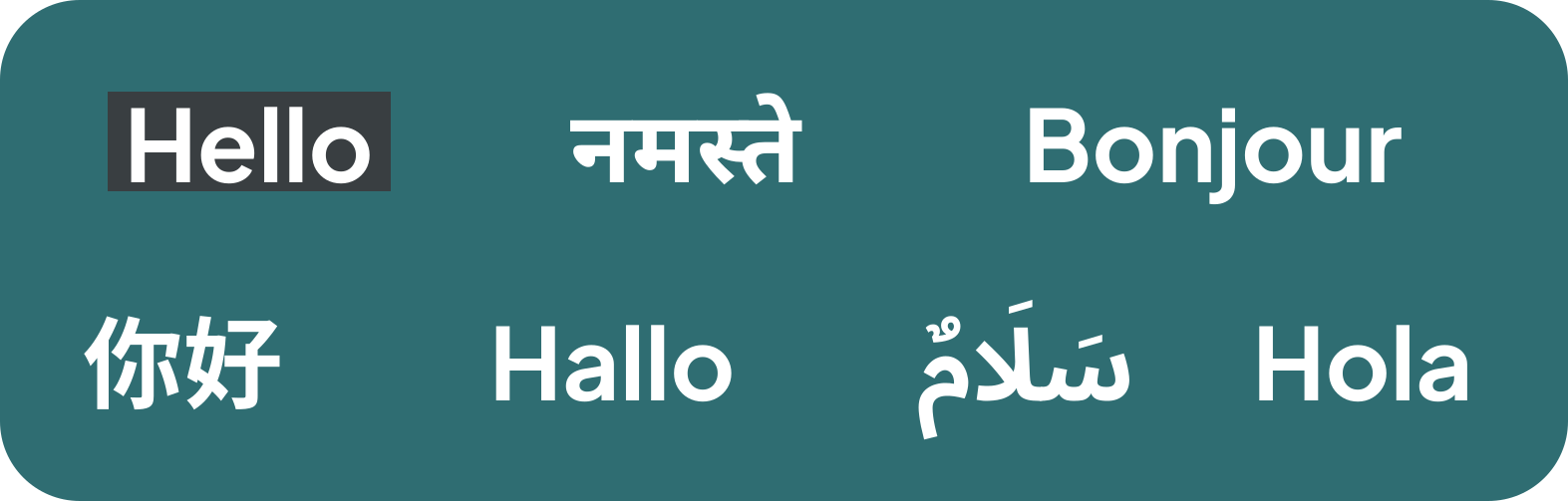
2.Choose from our library of voices in 87+ languages with natural, emotional conversations and define the behaviour and tone of your agents
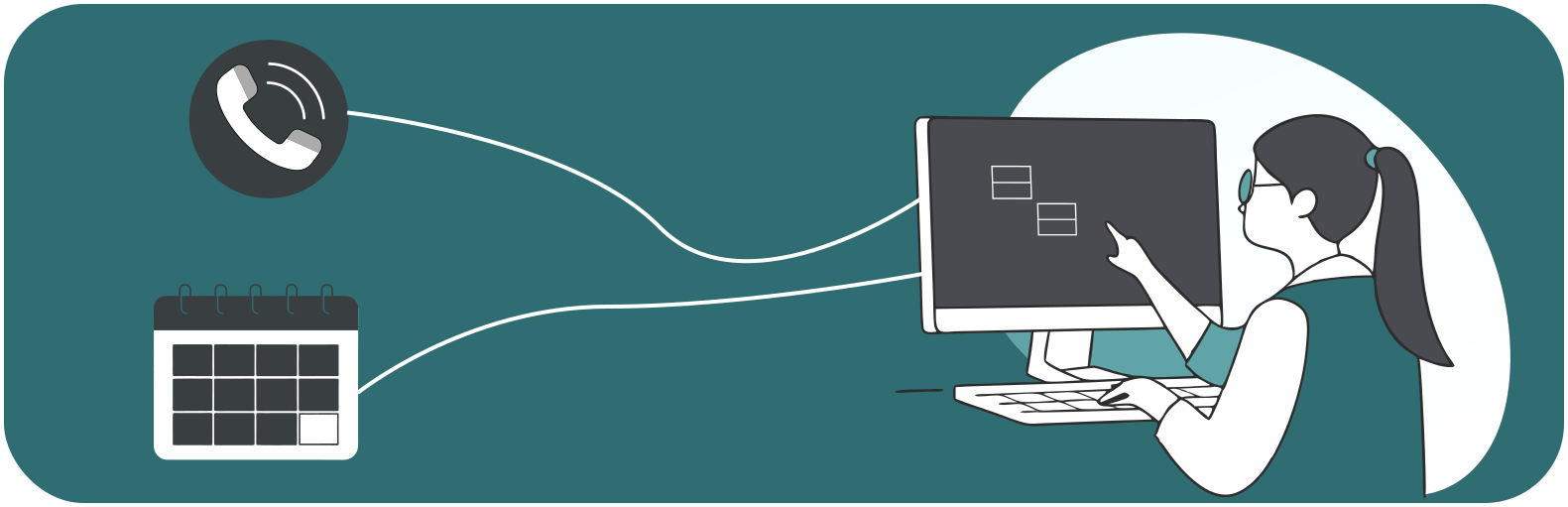
3.Integrate powerful tools into your agents and chat with them to turn them from interns to superstars.

4.Deploy your agents for them to handle inbound & outbound phone calls and chats with your patients.
FAQ
What teams and decision makers ask us first
Your team stops chasing, reminding and keeping lists; the agent does that. Your staff handle the conversations that need judgement or attention, with the file already on screen. They decide per step what the agent may do.
With the task that takes the most work today, often the morning phone peak, referral intake or calling down the waiting list. That task goes live during office hours with your team as backup. Once it works, the next step is added.
Yes. With Medicore and Nedap Ons (Dutch EHRs) the integration is live: Inquira reads patient details, calendars and appointments, and writes back appointments, notes and documents. Other EHRs, such as Epic, Oracle Health, Dedalus ORBIS or HiX, connect via FHIR, HL7 or API; you can also start without an integration.
No, and that is technically enforced, not just by instructions. The agent handles logistics: access, registration, documents and scheduling. Clinical judgement stays with your professionals.
The agent transfers straight to your team, with who is calling, why, and a short summary. What happens out of hours is set in your protocol before go-live.
The agent introduces itself as an AI assistant of your organisation at the start of every call. Anyone who prefers a person is put through; anyone who doesn't want to call uses the link. You can read back every call, so you see for yourself how people respond.
Every call is in the timeline as a transcript and summary, so your team sees what was said and done. You correct an appointment or note the way you always do. What can be better goes into the agent's answers at the review every 4 to 6 weeks.
One scoped task goes live in 4 to 6 weeks. After that you expand step by step, at your own pace. No IT project or migration is needed.
Phone, chat, SMS and email, in 87+ languages. The process is the same in every language, and your team keeps working in its own.
No. Inquira stores only the transcript and limited metadata, hosted in the EU. Models are not trained on healthcare data, and the data processing agreement follows the Dutch healthcare sector's standard model (BOZ).
Yes. Data is hosted in the EU under a GDPR data processing agreement, and we connect to your EHR via FHIR, HL7 or API, or start without an integration. Our customers today are Dutch care organisations; we can arrange a reference call.
Explore Related Use Cases
Discover how these related solutions can work together to improve your operations.