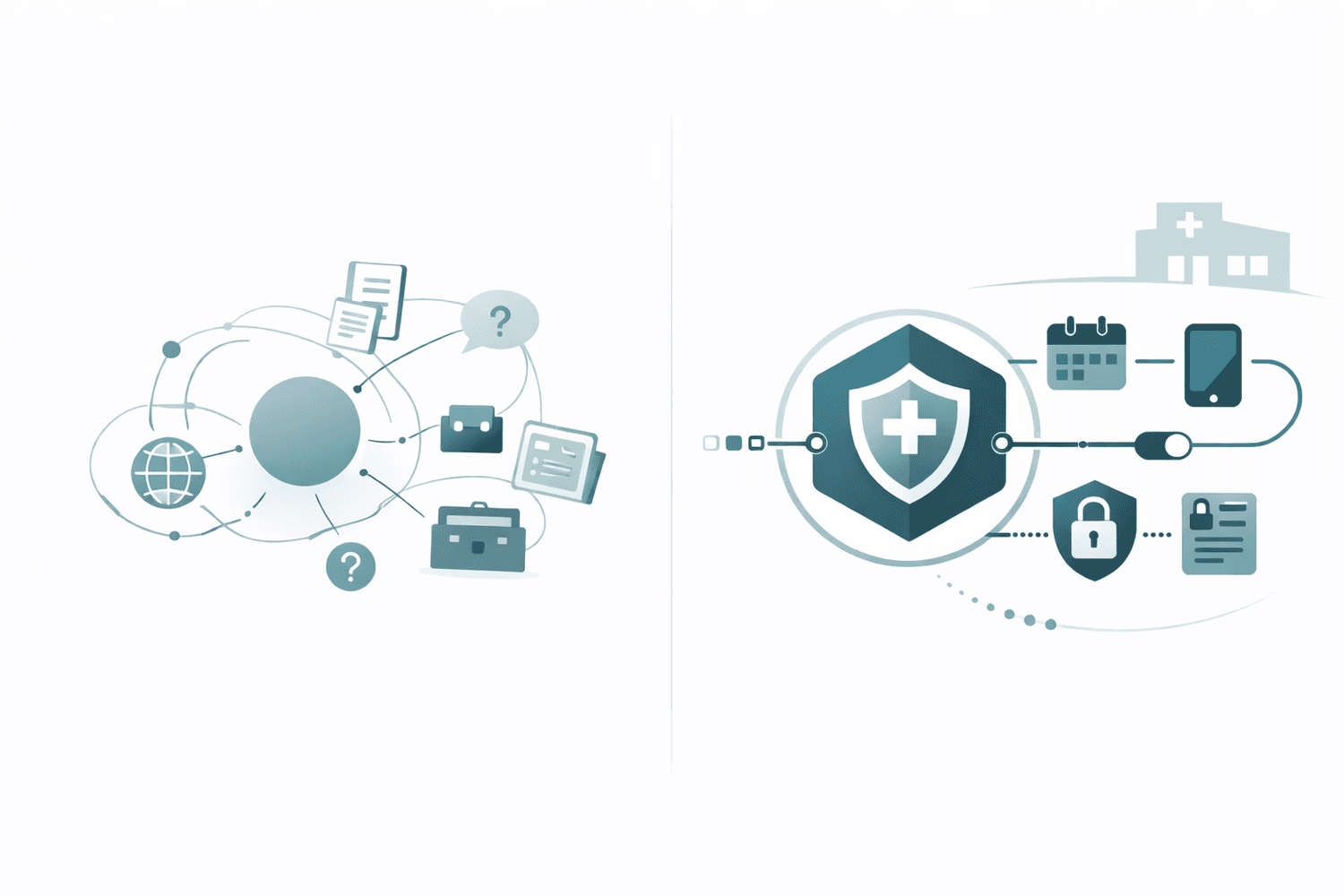
The Sovereign AI Workforce: Reengineering European Healthcare Administration Through Voice Artificial Intelligence
Jan 13, 2026
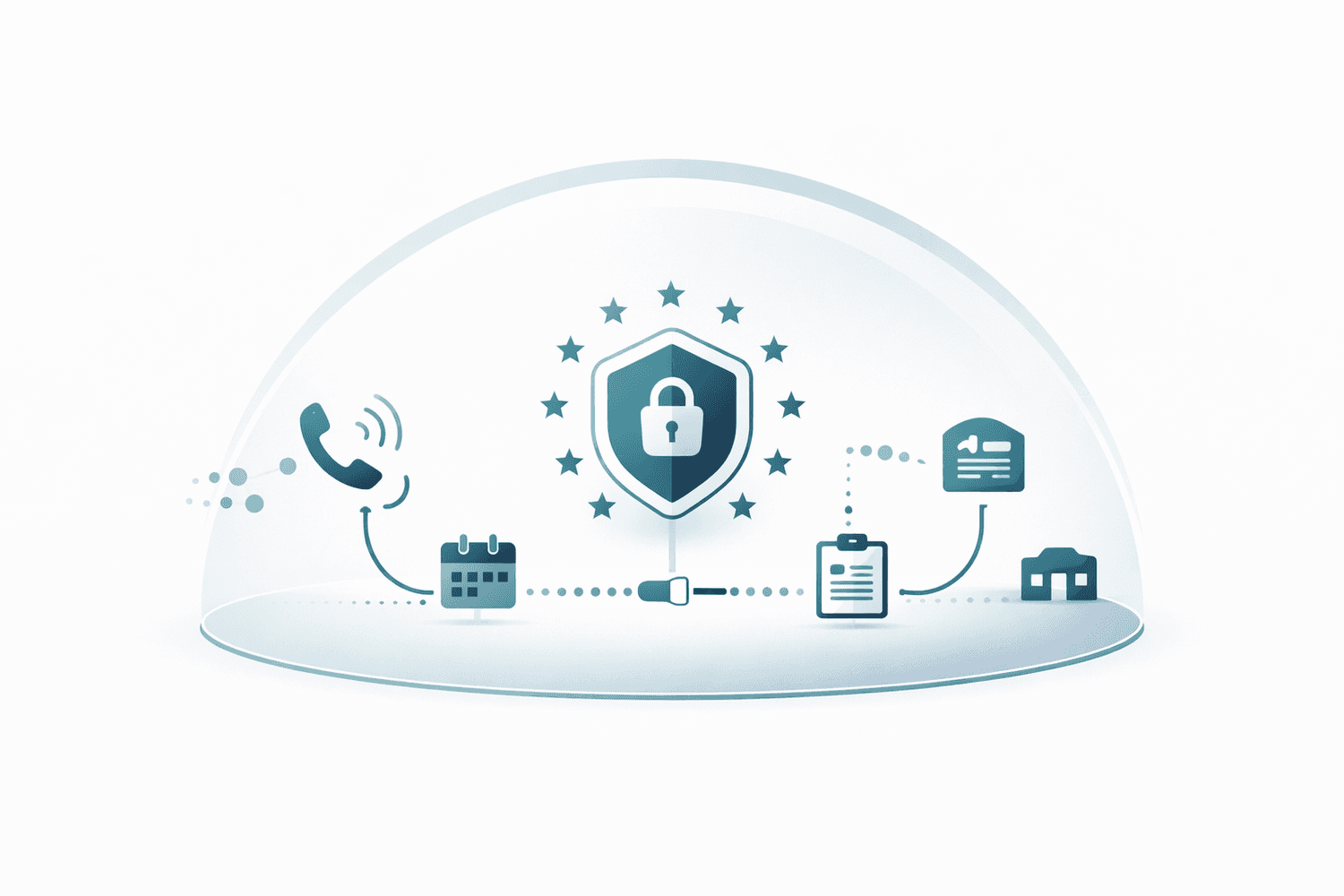
The European healthcare landscape is currently navigating a period of profound structural tension defined by a collision between escalating patient demand and a rigid diminishing supply of clinical and administrative capacity. This report provides an exhaustive analysis of the operational crisis facing European health systems, quantifies the economic and human toll of administrative inefficiency and examines the emergence of generative voice artificial intelligence as a critical intervention. Central to this analysis is a detailed evaluation of Inquira Health, a European-native platform designed to automate patient operations, positioned against a global field of competitors including Bland AI, Retell AI, Poly.ai and Parakeet Health. The findings suggest that while the global market for voice AI is maturing rapidly, the specific regulatory, linguistic and operational exigencies of the European market necessitate a specialized regional approach that prioritizes data sovereignty and clinical compliance over mere conversational latency or generic automation.
The backdrop to this technological inflection point is a workforce crisis of historical magnitude. Data aggregated from the Organisation for Economic Co-operation and Development (OECD) indicates that the health and social care sector across Europe is currently grappling with approximately 1.6 million unfilled job openings [1]. This deficit is not merely a function of insufficient training pipelines but is exacerbated by a retention crisis driven by burnout. A significant contributor to this burnout is the misalignment of human capital. Research suggests that approximately 25 percent of all healthcare personnel are currently deployed in administrative roles rather than direct clinical care [1a] [1b]. This statistic represents a massive opportunity cost: highly trained professionals are spending a quarter of their capacity on the logistics of care, scheduling, intake, triage and billing, rather than the delivery of care itself.
The financial implications of this friction are equally stark. Eurostat data reveals that the annual administrative burden across European health systems amounts to an estimated €240 billion [2]. This figure, which rivals the total gross domestic product of mid-sized European nations, represents resources that are effectively incinerated by friction, redundancy and obsolete communication modalities. Within this context, Inquira Health’s proposition of an "AI Workforce" moves beyond the scope of traditional software-as-a-service (SaaS) efficiency tools and enters the realm of structural capacity generation. By automating the "front office" of healthcare with the same rigor that medical technology has applied to the "back office" of diagnostics and treatment, such platforms promise to decouple patient volume from linear staffing requirements, offering a pathway to sustainability for systems currently pushed to their breaking point.
The Epidemiology of Administrative Failure in European Healthcare
To understand the necessity of an artificial intelligence intervention, one must first perform a rigorous diagnostic of the administrative pathology afflicting European healthcare systems. The current operational model, largely inherited from the mid-20th century, relies heavily on synchronous, voice-based communication managed by human operators. This reliance creates bottlenecks that are mathematically inevitable whenever demand spikes, leading to the "patient access gap" identified in strategic analyses of the sector.
The Economic Physics of the Appointment Gap
The most visible symptom of administrative failure is the phenomenon of the missed appointment, clinically referred to as "Did Not Attend" (DNA). While often attributed to patient negligence, a deeper analysis reveals that DNA rates are frequently a function of communication barriers. When patients cannot easily contact a clinic to reschedule due to jammed phone lines or limited operating hours, they simply fail to appear. The economic impact of this friction is severe. Data from major academic hospitals in the European Union indicates that missed and canceled appointments cost between 5-10% of total revenue for a care organization [3].
This figure is composed not only of the direct revenue loss from the unfilled slot but also the downstream costs of disrupted care continuity. When a patient misses a preventive screening or a chronic disease management check-up, the likelihood of an acute exacerbation increases, leading to more expensive emergency interventions later. In the United Kingdom, the National Health Service (NHS) has long battled this issue, with millions of appointments lost annually. The "No-Show" creates a paradox where waiting lists for specialist care grow longer while available clinical hours go unused. Addressing this inefficiency requires a mechanism that can proactively manage the schedule, contacting waitlisted patients to backfill cancellations in real-time, a task that is logistically impossible for human staff to perform at scale but trivial for an intelligent agent.
The Bureaucratic Etiology of Physician Burnout
Beyond the financial waste, the human cost of administrative burden is a primary driver of the workforce crisis. Medical journals have extensively documented the correlation between administrative workload and clinician burnout. A study published in the European Journal of Public Health highlighted the relationship between digital health profiles and burnout, noting that primary care physicians in countries such as Germany and the United Kingdom report profound dissatisfaction with the time spent on non-clinical tasks. The modern Electronic Health Record (EHR), while excellent for billing and legal record-keeping, has failed as a communication tool. As noted in industry analysis, EHRs are "great for charts but poor for chats". They were designed to document care that has already happened, not to facilitate the interactions required to make care happen.[4]
This "front-office gap" forces clinical staff to act as data entry clerks. In Germany, physicians report spending an increasing proportion of their day navigating complex billing codes (EBM/GOÄ) and documentation requirements, a phenomenon that detracts directly from patient face time. The introduction of Voice AI into this environment offers a form of "cognitive offloading." By delegating the repetitive, deterministic tasks of information gathering, scheduling and basic triage to an AI agent, healthcare systems can allow human staff to operate at the top of their license. This is not merely an efficiency measure but a retention strategy; by removing the drudgery of administration, organizations can improve the quality of working life for their most valuable assets.
The Structural Inadequacy of Legacy Systems
The persistence of these problems despite decades of digitalization efforts points to the failure of previous technologies. Traditional Interactive Voice Response (IVR) systems, the ubiquitous "press 1 for appointments" menus, serve as gatekeepers rather than facilitators. They are designed to deflect volume rather than resolve intent. In contrast, the patient population, increasingly accustomed to on-demand services in other sectors, finds these barriers frustrating. This "digital fatigue" can lead to patients disengaging from the healthcare system entirely until their conditions become acute.
Furthermore, legacy systems lack the agility to handle the volatility of healthcare demand. Patient volume is "spiky," driven by seasonal flu outbreaks, public health crises, or even the day of the week (the "Monday morning surge" in general practice). A static human workforce cannot flex to meet these spikes without creating massive inefficiencies during quieter periods. An AI workforce, however, offers infinite elasticity. It can scale from handling ten calls an hour to ten thousand calls an hour instantly, ensuring that patient access remains consistent regardless of external pressures. This capability moves the healthcare operation from a reactive stance, constantly firefighting the queue, to a proactive one where capacity is managed dynamically.
Inquira Health: The Architecture of a European Solution
Inquira Health has emerged as a distinct player in this space by rejecting the generic, globalist approach to AI development in favor of a highly specialized, region-specific strategy. Their platform is not marketed as a tool for developers but as a complete "workforce" solution for healthcare operations leaders. This distinction is crucial. While Silicon Valley competitors focus on API latency and developer flexibility, Inquira focuses on clinical workflow integration and regulatory hermeticism.
The Hybrid Intelligence Model
At the core of Inquira’s technological proposition is a hybrid architecture that combines Mature Generative AI with Deterministic Workflows. This architectural choice addresses the primary safety concern regarding AI in healthcare: hallucination. Pure large language models (LLMs) are probabilistic engines; they predict the next most likely word. In a creative writing context, this is a feature; in a medical triage context, it is a liability.
Inquira mitigates this risk by constraining the generative capability within rigid, rule-based guardrails. The AI uses its generative faculties to understand natural language, to parse accents, dialects and the myriad ways a patient might describe "stomach pain", but its actions are governed by deterministic logic. If a patient reports a specific symptom, the AI is hard-coded to ask a specific follow-up question or route the call to a specific destination. It cannot "improvise" medical advice. This "Think and Act" capability allows the agents to perform complex tasks, such as navigating a triage protocol or negotiating a calendar slot, while maintaining a complete audit trail of why a decision was made.
The Omni-Channel Continuity Engine
Healthcare interactions are rarely isolated events, they are longitudinal narratives. A patient might call to schedule an appointment, receive a preparation guide via email and later text to confirm the location. In legacy systems, these interactions live in silos. The receptionist answering the phone often has no visibility into the email the patient just sent.
Inquira’s agents are "omni-channel by default". They maintain a persistent memory of the patient's context across voice, chat and SMS. This continuity is essential for building trust. When an AI agent "remembers" that a patient prefers morning appointments or recently asked about a specific procedure, it simulates the personalized attention of a dedicated care coordinator. This capability transforms the interaction from a transaction into a relationship, which is a key determinant of patient satisfaction and adherence.
The No-Code Democratization of AI
One of the most significant barriers to technology adoption in healthcare is the reliance on IT departments. Hospital IT teams are notoriously overburdened, often with backlogs stretching years. Inquira circumvents this bottleneck through its "No-Code Agent Builder". This interface allows operational staff, practice managers, department heads, nursing leads, to create and deploy AI agents by simply uploading existing call scripts or selecting from a template library.
This feature shifts the ownership of the solution from the technologist to the clinician. A department head who notices a high rate of non-adherence to pre-surgery fasting rules can instantly spin up an outbound call agent to remind patients of these rules 24 hours before their procedure. This agility allows healthcare organizations to iterate on their operational processes in real-time, reacting to emerging needs without embarking on a six-month software development project.
The Compliance Fortress: Data Sovereignty as a Competitive Moat
In the European context, the quality of the algorithm is secondary to the legality of the data processing. The regulatory landscape in Europe is the strictest in the world, defined by the General Data Protection Regulation (GDPR) and the upcoming EU AI Act. For US-based technology companies, this landscape is a minefield, for Inquira, it is a fortress.
NEN 7510 and the Dutch Standard
Inquira Health’s certification under NEN 7510 is perhaps its most significant competitive differentiator within the Benelux region and a strong signal of trust for the wider continent. NEN 7510 is not merely a guideline, it is the legally mandated standard for information security in the Dutch healthcare sector. It extends the general principles of ISO 27001 with specific, rigorous controls regarding the availability, integrity and confidentiality of patient health information.
For a hospital in Rotterdam or a mental health clinic in Amsterdam, NEN 7510 certification is a binary requirement. A vendor either has it, or they are non-compliant. Most global AI competitors rely on generic SOC 2 certifications (an American standard) or ISO 27001. While these are robust, they do not map one-to-one with the specific requirements of Dutch healthcare law (Wabvpz). By securing this certification, Inquira effectively locks out US-centric competitors from the Dutch market and establishes a gold standard for compliance that resonates across Europe.
Navigating the EU AI Act
The impending enforcement of the EU AI Act represents a seismic shift for the technology sector. The Act categorizes AI systems based on risk, with "High Risk" systems subject to onerous conformity assessments and "Limited Risk" systems subject to transparency obligations. Inquira has proactively aligned its platform with the Act, classifying its agents as "Limited Risk" systems that interact with humans [4].
This involves technical implementations of transparency (ensuring the user knows they are speaking to an AI) and the maintenance of detailed technical documentation and logging. Inquira’s "Audit Trails" are designed to align with ISO 27789 and NEN 7513, providing immutable logs of every PII read/write event. This level of granular traceability is essential for accountability and is often missing from "wrapper" solutions that simply put a voice interface on top of a generic LLM.
The Imperative of Data Residency
Following the Schrems II judgment by the Court of Justice of the European Union, the transfer of personal data to the United States has become legally perilous. European healthcare providers are increasingly demanding data sovereignty, the guarantee that their data will never leave the European Economic Area (EEA) and thus remain outside the reach of US surveillance laws like FISA Section 702.
Inquira addresses this by offering isolated EU data regions. This is not just a matter of hosting on AWS Frankfurt, it involves ensuring that no sub-processors, support staff, or metadata analytics pipelines transfer data outside the EU. This "sovereign cloud" approach is a prerequisite for working with public health entities in countries like France and Germany, where digital sovereignty is a matter of national policy.
Comparative Analysis: Inquira Health Versus the Global Field
To fully appreciate Inquira’s position, it is necessary to contrast it with the alternative solutions available in the market. The Voice AI landscape is crowded, but largely dominated by US-based companies that view Europe as a secondary market.
1. Inquira Health vs. Bland AI
Bland AI represents the archetype of the "hyper-growth" Silicon Valley infrastructure play. It offers extreme speed, low latency and realistic voices, marketed aggressively to developers 3.
- The Compliance Gap: Bland AI operates on a US-centric legal framework. While it claims GDPR compliance, its primary certifications are HIPAA (US) and SOC 2. It does not possess NEN 7510 certification, making it legally non-viable for Dutch healthcare providers without significant additional legal wrappers. Its Data Processing Agreement (DPA) is a standard commercial template, whereas Inquira maps DPAs 1:1 to specific clinical workflows to facilitate procurement.
- The Use Case Mismatch: Bland AI’s marketing heavily emphasizes sales, telemarketing and "handling objections", language suited for high-pressure sales environments. In healthcare, the goal is empathy and triage, not conversion. Inquira’s agents are tuned for the nuance of patient interaction, understanding that a "customer" is actually a patient potentially in distress.4
- Verdict: Bland AI is a powerful engine, but Inquira is the ambulance. For a European hospital, buying Bland AI is like buying a Ferrari engine and trying to build a medical transport vehicle around it. Inquira provides the finished vehicle, fully certified and road-legal.
2. Inquira Health vs. Retell AI
Retell AI focuses on "low-code" developer tools and telephony integration, aiming to be the Twilio of Voice AI [5].
- The Infrastructure Focus: Retell excels at the technical layer, connecting LLMs to phone networks with low latency. However, it leaves the application layer to the customer. A hospital using Retell must build its own integrations with the EHR, design its own conversation flows and ensure its own compliance.
- Integration Limitations: While Retell integrates with US-centric platforms, Inquira offers FHIR-friendly connectors specifically designed for the fragmented European EHR landscape. This "last mile" integration is often the most expensive and risky part of any health tech project.
- Verdict: Retell is a strong choice for a health-tech startup building a new app, but for an existing hospital looking for an operational solution, it presents too high a technical barrier. Inquira’s pre-packaged workflows offer a faster time-to-value.
3. Inquira Health vs. Hello Patient
Hello Patient is a direct competitor in the "AI for patient engagement" space, but with a distinct US orientation [6].
- The Revenue Cycle Focus: Hello Patient’s value proposition is tightly coupled with the US insurance model. Features like "insurance verification," "co-pay collection," and "revenue recovery" are paramount in the US but less relevant in European systems funded by general taxation or social insurance. A UK GP does not need to verify insurance eligibility, they need to manage capacity.
- Data Sovereignty: As a US-based entity, Hello Patient faces the same data sovereignty hurdles as other American firms. Without a dedicated European subsidiary and isolated infrastructure, they struggle to meet the strict "sovereign cloud" requirements of public health authorities in the EU.
- Verdict: Inquira wins in Europe by solving for capacity (a universal problem) rather than billing (a US problem). Its product roadmap is aligned with the needs of socialized medicine rather than private insurance markets.
4. Inquira Health vs. Poly.ai
Poly.ai is a heavyweight enterprise platform, spun out of Cambridge University, serving global giants in banking, logistics and hospitality [7]
- The Scale Mismatch: Poly.ai is designed for massive contact centers handling millions of calls. Its deployment model typically involves long sales cycles, heavy professional services fees and complex custom implementation. This puts it out of reach for individual clinics, mid-sized hospital departments, or regional GP federations.
- The Agility Deficit: Inquira’s "No-Code" builder allows for rapid experimentation and deployment. A department head can test a new script for flu vaccination reminders in an afternoon. With Poly.ai, such a change might require a change request and a development cycle.
- Verdict: Poly.ai is the choice for a multinational telecom, Inquira is the choice for healthcare operations. Inquira’s agility and domain specificity allow it to win in the "mid-market" of healthcare where Poly.ai is too cumbersome and expensive.
5. Inquira Health vs. Parakeet Health
Parakeet Health is another US-native vertical solution, focusing heavily on senior care and Medicare advantage plans [8]
- The Market Specificity: Parakeet is deeply embedded in the US "Value-Based Care" and Medicare ecosystem. Its agents are trained to close "care gaps" defined by US quality metrics (HEDIS, Star Ratings). These metrics and incentives do not translate to the European context.
- Verdict: Parakeet is hyper-specialized for a market that does not exist in Europe. Inquira’s broader focus on operational logistics makes it a more versatile player for the EU.
6. Inquira Health vs. Corti
Corti is a European (Danish) success story, famous for its AI co-pilot that assists emergency dispatchers in detecting cardiac arrests [9]
- The Functional Distinction: Corti is primarily a clinical decision support (CDS) and documentation tool. It listens to the consultation and helps the doctor or dispatcher make better medical decisions. It augments the clinician.
- Inquira’s Position: Inquira augments the administrator. It handles the scheduling, the rescheduling and the routine intake, tasks that happen before or after the clinical encounter.
- Verdict: Complementary, not competitive. A hospital might use Inquira to get the patient to the appointment and Corti to assist the doctor during the appointment. However, Inquira captures the value of access, which is the current bottleneck. We would recommend implementing Corti and Inquira Health to cover both your clinical and patient operations needs.
7. Inquira Health vs. Tucuvi
Tucuvi (Spain) uses voice AI for automated clinical monitoring, such as calling heart failure patients to check symptoms [10]
- Medical Device Regulation: Tucuvi is certified as a Class IIb medical device. This allows it to perform clinical monitoring but imposes massive regulatory overhead and slows product iteration.
- Verdict: Inquira focuses on operations, the business of running the hospital. By staying on the "administrative" side of the line (scheduling, intake questionnaires), Inquira avoids the heavy burden of MDR (Medical Device Regulation) while still delivering massive value. This allows for faster sales cycles and broader applicability than Tucuvi’s strict clinical focus.
8. Inquira Health vs. Autoscriber
Autoscriber (Netherlands) focuses on ambient clinical scribing, listening to the doctor-patient conversation to automate the EHR note [11]
- Verdict: Autoscriber solves the documentation problem. Inquira solves the logistics problem. Inquira’s competitive advantage lies in its ability to manage the patient interaction outside the exam room, a space where Autoscriber does not play.
9. Inquira Health vs. Hyro
Hyro bills itself as an "Adaptive Communications Platform" for healthcare, using a "knowledge graph" approach rather than pure LLMs to ensure accuracy [12]
- The Architecture: Hyro’s focus on explainability and safety is strong and aligns well with healthcare needs. However, it is largely US-focused in its customer base and integrations.
- Verdict: Hyro is a strong technological competitor, but Inquira’s specific focus on the European market (NEN 7510, EU languages, local EHRs) gives it the edge in regional deployments.
10. Inquira Health vs. Talkdesk / Kore.ai
Talkdesk and Kore.ai are massive CCaaS (Contact Center as a Service) platforms that include AI capabilities [13]
- Verdict: These are horizontal behemoths. Implementing them in a hospital requires a massive digital transformation project. Inquira offers a "point solution" that can be deployed in a single department in days, offering a much faster path to ROI and lower barrier to entry.
Strategic Analysis: The Path to 2030
The European healthcare sector is entering a decade of forced transformation. The luxury of inefficiency is gone. With the "Silver Tsunami" of aging demographics hitting simultaneous to a workforce contraction, the adoption of AI is no longer a question of "if" but "how fast."
The Shift from Task Automation to Role Augmentation
We are witnessing a paradigm shift. The first wave of digital health was about digitizing records (EHRs). The second wave was about digitizing access (online booking). The third wave, led by companies like Inquira, is about digitizing the workforce.
Inquira’s agents do not just perform tasks, they fulfill roles. By managing end-to-end workflows, they effectively add capacity to the system. An agent that manages a waiting list is not just a piece of software; it is the equivalent of a full-time scheduling coordinator who works 24/7, speaks every European language and never burns out.
The Sovereignty Dividend
As geopolitical tensions rise and digital sovereignty becomes a central pillar of EU policy, European-native tech companies will enjoy a structural advantage. Public procurement rules are increasingly favoring vendors who can guarantee data residency and alignment with EU values. Inquira’s "EU-First" strategy is not just a compliance measure; it is a commercial masterstroke. It aligns the company with the long-term political trajectory of the continent.
Recommendations for Healthcare Leaders
For European healthcare executives, the choice of an AI partner must be driven by three factors: Time to Value, Compliance Safety and Operational Fit.
- Prioritize Solutions over Toolkits: Do not buy APIs (Bland/Retell) and hope your IT team can build a solution. Buy proven workflows (Inquira).
- Demand Sovereign Compliance: Do not compromise on GDPR or NEN 7510. The risk of regulatory fines (up to 7% of turnover under the AI Act) is too high [14]
- Start with Capacity: Focus AI deployment on the areas of highest friction, scheduling and intake. These offer the fastest ROI and the lowest clinical risk.
In conclusion, Inquira Health stands uniquely positioned at the intersection of technological capability and regional necessity. By building a platform that respects the complexity of European healthcare while aggressively attacking its inefficiencies, they offer not just a product, but a lifeline to a system in distress.
Comparison Matrix: Voice AI Solutions for European Healthcare
| Platform | Primary Focus | EU Data Sovereignty | NEN 7510 Certified | EU AI Act Aligned | EHR Integration Strategy | Verdict for EU Healthcare |
|---|---|---|---|---|---|---|
| Inquira Health | EU Patient Operations | Native (EU Regions) | Yes | Yes (Limited Risk) | EU-Specific (FHIR) | Best Overall Fit |
| Bland AI | Developer Infrastructure | Weak / Variable | No | Unclear | DIY (API-based) | High Risk / High Effort |
| Retell AI | Low-Latency Voice API | Weak / Variable | No | Unclear | DIY (API-based) | High Risk / High Effort |
| Poly.ai | Enterprise Contact Center | Good | Unclear | Likely | Custom Enterprise | Too Expensive / Complex |
| Parakeet | US Senior Care / RCM | Low (US Centric) | No | No | US EHRs Only | Poor Fit (US Specific) |
| Hello Patient | US Digital Front Door | Low (US Centric) | No | No | US EHRs Only | Poor Fit (US Specific) |
| Corti | Clinical Decision Support | High (EU Native) | Likely | Yes | Clinical Focus | Complementary (Clinical) |
| Tucuvi | Remote Patient Monitoring | High (EU Native) | Yes (MDR) | Yes | Clinical Focus | Complementary (Clinical) |
| Autoscriber | Ambient Scribing | High (EU Native) | Yes | Yes | Clinical Focus | Complementary (Clinical) |
| Hyro | Adaptive Communications | Moderate | No | Unclear | US Focused |