Specialized vs. Generic AI: Why Healthcare Needs Purpose-Built Virtual Assistants
Mar 17, 2026
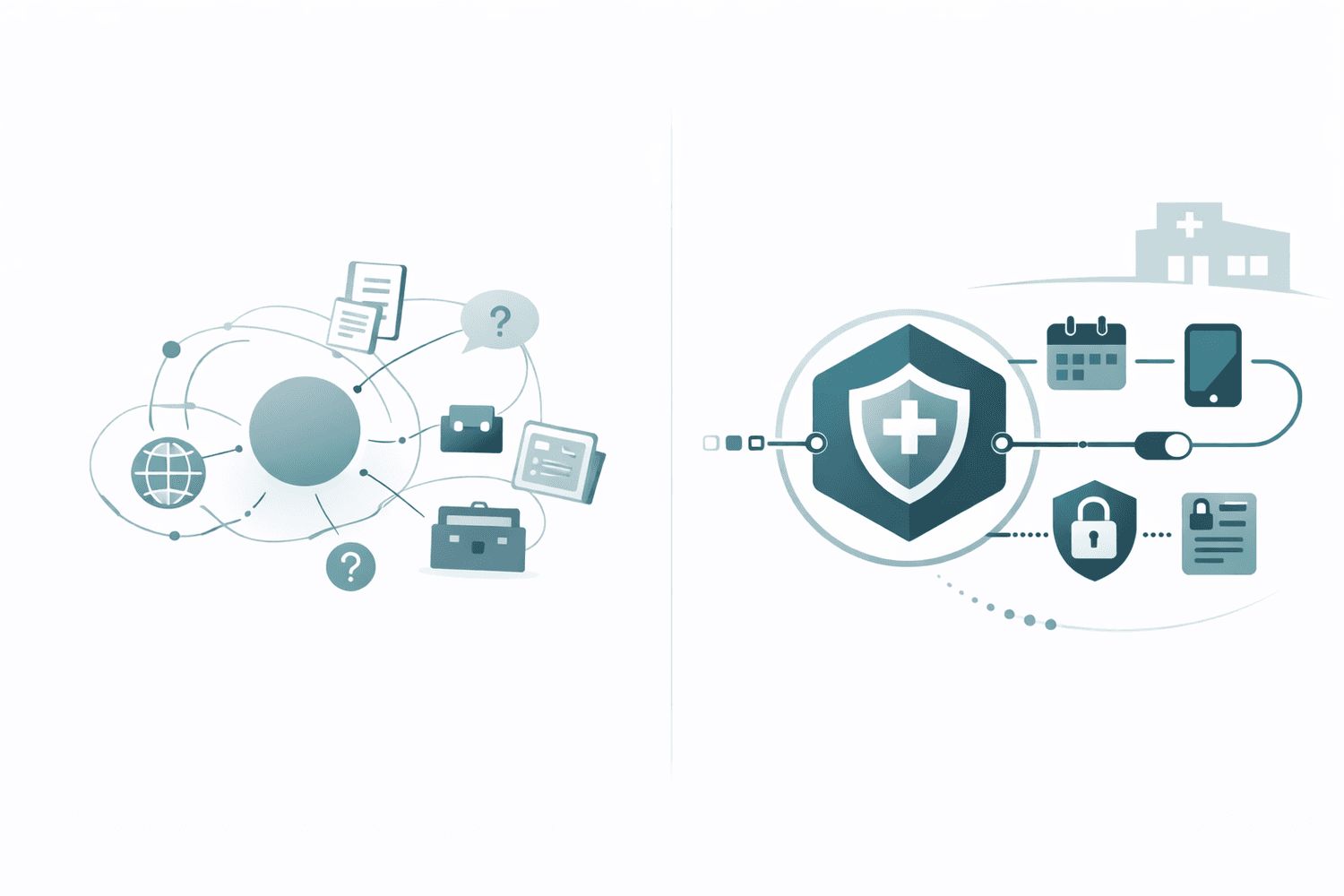
The European healthcare sector currently stands at a pivotal juncture, balanced precariously between the promise of digital transformation and the peril of systemic collapse. A convergence of demographic shifts, economic constraints and a critical workforce shortage has created a "poly-crisis" that threatens the sustainability of universal health coverage across the continent. In this context, Artificial Intelligence (AI) has emerged not merely as a technological novelty, but as an operational necessity. The rise of Generative AI (GenAI) and Large Language Models (LLMs) offers a tantalizing solution to the administrative burdens that plague clinicians and stifle patient access. However, as healthcare organizations rush to adopt these tools, a dangerous dichotomy has surfaced: the choice between Generic AI, broad, general-purpose models trained on the open internet and Specialized, Purpose-Built Virtual Assistants designed specifically for the rigors of clinical workflows.
This strategic report, commissioned by Inquira Health, provides an exhaustive analysis of this critical decision matrix. Drawing upon an extensive review of medical journals, national health data and regulatory frameworks from the European Union and the United Kingdom, we argue that while Generic AI offers a powerful foundation, it is fundamentally ill-suited for the high-stakes environment of healthcare. The evidence reveals that generic models suffer from critical deficiencies in clinical accuracy, linguistic cultural competence and regulatory compliance.
Our analysis highlights stark performance disparities, such as a massive 51-point gap in medical licensing exam accuracy between Italian and French languages when using generic models.[1] We expose the persistent risk of "hallucinations" in clinical documentation and the profound legal liabilities introduced by the EU AI Act and GDPR when utilizing non-compliant "black box" systems.[3] Furthermore, we demonstrate that the economic argument favors specialization; purpose-built systems, integrated deeply into hospital workflows (e.g., Electronic Health Records, SNOMED CT coding), unlock productivity gains, such as the 43 minutes per day saved in recent NHS trials, that generic chat interfaces cannot replicate.[5]
Ultimately, this report advocates for the adoption of "AI Employees", specialized, always-on virtual assistants that replace antiquated Interactive Voice Response (IVR) systems. These purpose-built agents do not just converse; they act, adhering to strict clinical guardrails and national guidelines (NICE, HAS, AWMF) to deliver safe, compliant and efficient patient care. For European healthcare leaders, the path forward is clear: to realize the true ROI of AI and safeguard patient trust, the industry must move beyond the generalist hype and embrace the precision of the specialist.
The European Healthcare Landscape and the AI Imperative
To understand the necessity for specialized intelligence, one must first appreciate the magnitude of the challenges facing European health systems. We are witnessing the dismantling of the traditional social contract of healthcare, driven by a mismatch between demand and capacity that human effort alone can no longer bridge.
The Workforce Precipice: A System at Breaking Point
The most acute driver for the adoption of AI is the widening gap between the demand for care and the supply of qualified clinicians. The World Health Organization (WHO) and European Commission data project a devastating shortfall of approximately 4 million healthcare workers in Europe by 2030.[7] This is not a distant projection; the effects are being felt today in emergency room waiting times, delayed surgeries and the burnout of staff who remain.
In the United Kingdom, the National Health Service (NHS) is currently engaged in a frantic productivity drive, attempting to extract efficiency gains from a workforce that is already operating at maximum capacity. The administrative burden on these workers is staggering. It is estimated that a significant portion of a clinician's day is consumed not by patient care, but by documentation, coding and logistical coordination. Recent trials involving 30,000 NHS workers utilizing AI productivity tools have underscored the scale of this opportunity. These pilots found that automated administrative support could save an average of 43 minutes per staff member per day.
Aggregated across the entire NHS workforce, this equates to a potential liberation of 400,000 hours of staff time every month. This is the equivalent of adding thousands of new full-time employees without hiring a single person. However, realizing these gains requires more than just a chatbot; it requires systems that can reliably handle the nuanced administrative tasks, referral letters, discharge summaries, coding, that consume this time. The "burnout epidemic" is inextricably updates to the cognitive load of these tasks. Introducing generic tools that require constant fact-checking can paradoxically increase this load, a phenomenon known as "death by clicks." Therefore, the solution must be technology that functions with the autonomy and reliability of a trusted colleague, an "AI Employee." [2]
The Economic Stranglehold and Value-Based Care
Financial pressures are equally severe. European healthcare expenditure is rising faster than GDP, driven by the dual engines of aging populations and the increasing prevalence of chronic diseases. The market for AI in European healthcare is projected to grow from €6.[12] billion in 2025 to €31.72 billion by 2030, representing a Compound Annual Growth Rate (CAGR) of 39.0%.[8] This explosion in investment is not a luxury but a survival strategy.
Governments are responding with ambitious modernization plans that tie funding to digital transformation and outcomes:
- France: The "Ma Santé 2022" initiative represents a comprehensive overhaul aimed at improving access and reorganizing hospital services, placing digital infrastructure at the core of the new care model.[9]
- Germany: The Digital Healthcare Act (DVG) has pioneered the DiGA (Digitale Gesundheitsanwendungen) fast-track process. This revolutionary framework allows doctors to prescribe digital health applications, which are then reimbursed by statutory health insurance funds. As of July 2024, 64 DiGAs have been approved.[11]
The economic lesson from the DiGA model is crucial: reimbursement is contingent on proving a "positive healthcare effect" (medical benefit or structural improvement). Generic AI, with its variable outputs and lack of specific clinical validation, struggles to meet the stringent Health Technology Assessment (HTA) criteria required for these reimbursement schemes. To unlock the economic value of AI, the technology must be specific, measurable and clinically validated, traits inherent to specialized, purpose-built systems.
The Failure of Legacy Digital Health (IVR)
For decades, the primary interface between the patient and the health system has been the telephone, mediated by Interactive Voice Response (IVR) systems. These rigid, menu-driven systems ("Press 1 for Appointments") are universally disliked by patients and inefficient for providers. They cannot triage, they cannot empathize and they cannot solve complex problems.
The transition Inquira Health advocates for, from IVR to Conversational AI and Virtual Assistants, is a shift from "routing" to "resolving." In Western Europe, where patient expectations for access are high, the ability to offer 24/7 patient communication is a key differentiator.[13] An AI Employee that can answer the phone at 3 AM, assess the urgency of a symptom and schedule an appointment directly into the hospital information system is not just an upgrade; it is a replacement of a broken analog process with a digital agent. However, entrusting an AI with this level of autonomy requires a level of safety and precision that generic models simply do not possess.
The Generic AI Trap – A Technical and Clinical Deep Dive
The release of ChatGPT and similar General-Purpose AI (GPAI) models captured the imagination of the medical community. Early headlines touted their ability to pass the United States Medical Licensing Examination (USMLE) and generate empathetic responses to patient queries. However, this initial enthusiasm has given way to a more nuanced and cautious understanding. A rigorous analysis of medical literature reveals that the "illusion of competence" provided by generic models can be dangerous in a European context.
The "Jack of All Trades" Problem: Probabilistic vs. Deterministic
Generic models (e.g., GPT-4, Llama 3) function as probabilistic engines. They predict the next word in a sequence based on statistical likelihood derived from terabytes of training data scraped from the open internet. While this gives them a broad "world model," it results in a shallow understanding of highly specialized domains.
In healthcare, "most likely" is often not good enough. Clinical medicine is deterministic and protocol-driven. If a patient presents with specific symptoms, the response must adhere to the specific guideline (e.g., NICE NG123), not a statistical amalgamation of internet advice.
- The Hallucination Risk: A generic model might invent a plausible-sounding but non-existent drug interaction because statistically, those words often appear together in its training data. Research on generic LLMs in clinical note generation initially showed high rates of hallucination, confidently stating facts that were not in the source text. While prompts can reduce this, the underlying architecture remains prone to fabrication.[15]
- The "Black Box" of Logic: Generic models struggle to explain why they chose a specific path. In a study comparing AI diagnostic tools, while some achieved high accuracy, the lack of transparency in how the decision was reached remains a barrier to trust and regulatory approval.[17]
The "Exam Gap": Evidence of Cultural and Linguistic Bias
One of the most damning pieces of evidence against the use of generic AI in European healthcare comes from a comparative study of medical licensing exams. The internet is predominantly English and the training data for models like GPT-4 reflects this bias. When these models are tested on non-English, European medical exams, the performance drop-off is precipitous.
Generic AI Performance on National Medical Licensing Exams
| Country | Exam | Generic AI Accuracy (GPT-4) | Implications for Clinical Safety |
|---|---|---|---|
| USA | USMLE | >85% | High alignment with training data; model understands US protocols well. |
| Italy | SSM | 73% | Moderate performance; adequate for basic assistance but requires oversight. |
| France | ECN | 22% | Critical Failure. The model fails 4 out of 5 times. High risk of malpractice. |
Analysis of the Disparity:
The massive 51-point gap between Italian and French performance cannot be explained by a difference in medical science; the physiology of a French patient is identical to that of an Italian patient. The failure lies in the cultural and linguistic specificity of the exam questions.
- Linguistic Nuance: French medical questions (CNCI) are often longer (avg. 381 characters) and involve complex clinical reasoning and specific phrasing that differs from the Anglo-American "fact retrieval" style.
- Local Guidelines: The French exam tests knowledge of HAS (Haute Autorité de Santé) guidelines, which may differ subtly from international consensus. A generic model, lacking a "French Medical" fine-tuning, defaults to its dominant (US/English) training, leading to incorrect answers.
The Operational Consequence:
For a hospital in Paris or Brussels, relying on a generic model that fails 78% of the time on the national licensing exam is an unacceptable risk. It proves that "General Intelligence" does not translate to "Local Clinical Competence." A Virtual Assistant in Europe must be Purpose-Built to understand not just "medicine," but "medicine as practiced in this specific jurisdiction."
The Dangers of Hallucination in Clinical Documentation
Clinical documentation, writing discharge summaries, referral letters and operation notes, is a prime use case for AI assistance. However, the integrity of the medical record is sacrosanct.
A study evaluating 18 experimental configurations for clinical note generation found that generic LLMs had a baseline hallucination rate that posed significant safety risks. For example, a model might correctly summarize a patient's diagnosis but hallucinate a medication dosage ("Aspirin 81mg" instead of "75mg," based on US vs. UK norms).
While refining prompts can reduce this rate, one study achieved a 1.47% hallucination rate with optimized workflows , even a 1% error rate in medicine is significant when scaled across millions of patient interactions. Generic models lack the intrinsic "fact-checking" modules required to drive this to zero. They generate text that looks right, rather than text that is right. This necessitates a "Human-in-the-Loop" for every single output, which erodes the efficiency gains the AI was supposed to deliver.
The Regulatory Fortress – EU AI Act, GDPR and Liability
Europe is globally recognized as the "regulatory superpower" of the digital age. For healthcare organizations operating in the EU and UK, compliance is not a checkbox; it is a fundamental license to operate. This is where Generic AI faces its most significant hurdles and where Purpose-Built Virtual Assistants provide indispensable value.
The EU AI Act: A Risk-Based Framework for Healthcare
On August 1, 2024, the European Artificial Intelligence Act (AI Act) entered into force, establishing the world's first comprehensive legal framework for AI. The Act classifies AI systems based on the risk they pose to safety and fundamental rights.
High-Risk Classification
Under Article 6 and Annex I of the AI Act, AI-based software intended for medical purposes (diagnosis, treatment, monitoring, triage) is classified as "High-Risk".[18] This classification is not a label; it is a burden of proof. Providers of High-Risk AI systems must strictly adhere to:
- Risk Mitigation Systems: Implementation of continuous risk management processes throughout the lifecycle.
- Data Governance: Usage of high-quality, error-free and representative training data to prevent bias.
- Transparency and Record-Keeping: Automatic logging of events (traceability) to allow for post-market analysis.
- Human Oversight: Design that allows for effective human supervision.
Why Generic AI Struggles:
Generic models like ChatGPT are classified as General-Purpose AI (GPAI). While they have their own set of transparency rules, they are not inherently designed to meet the specific High-Risk requirements of medical devices.
- Traceability Failure: A generic neural network is a "black box." It often cannot explain why it prioritized one patient over another, failing the transparency requirement.
- Data Quality Failure: Generic models are trained on the "whole internet," including misinformation and biased content. It is nearly impossible to certify that a generic model's training data is "error-free" in a medical context.[19]
The Specialized Advantage:
Purpose-Built Virtual Assistants are developed within a Quality Management System (QMS) (e.g., ISO 13485) from day one.[20] Their training data is curated (clinical guidelines, validated medical texts), ensuring compliance with data governance rules. Furthermore, they can be engineered to provide citations and logic trails (e.g., "Triage Category Red based on Manchester Protocol Rule 3"), satisfying the transparency and human oversight mandates.
The Intersection with Medical Device Regulations (MDR/IVDR)
The AI Act does not exist in a vacuum; it layers on top of the Medical Device Regulation (MDR) and In Vitro Diagnostic Regulation (IVDR). AI software that qualifies as a medical device must undergo a third-party conformity assessment by a Notified Body.[21]
This creates a "dual legal framework" that traps generic AI. If a hospital uses a generic chatbot for patient intake and that chatbot interprets symptoms to suggest a course of action, it may effectively be acting as an unauthorized medical device. If it hasn't been certified as a Class IIa device, the hospital faces massive legal exposure.
Specialized assistants are explicitly scoped. An Inquira "Intake Assistant" is designed with strict boundaries. It can be certified as a medical device for specific triage tasks, or carefully engineered to remain a "reception tool" that passes clinical decisions to humans. This "intended use" control is impossible with a generic model that will happily answer any medical question asked of it, regardless of its safety certification.
GDPR and the Sanctity of Patient Data
The General Data Protection Regulation (GDPR) remains the bedrock of privacy in Europe. The use of AI in healthcare triggers several high-stakes GDPR articles, particularly regarding Data Sovereignty and Automated Decision Making.
The "Data Leakage" and Sovereignty Threat
Using generic, cloud-based AI agents (like Microsoft Copilot in its default configuration) carries risks of over-permissioning and data leakage. A recent critique of Copilot usage in the NHS highlighted that staff could inadvertently access confidential HR or patient files via the AI if permissions weren't strictly ring-fenced.[23]
Furthermore, relying on US-hosted generic model APIs involves transferring Patient Identifiable Information (PII) across the Atlantic. Despite frameworks like the Data Privacy Framework, this remains a legal minefield.
Specialized Solution: Purpose-built models (often based on open weights like BioMistral) can be deployed On-Premise or in a Sovereign Cloud (e.g., OVHcloud, T-Systems). This ensures that health data never leaves the European jurisdiction, complying with the strictest interpretations of data residency laws.[25]
Article 22: The Right to Explanation
GDPR Article 22 gives patients the right not to be subject to a decision based solely on automated processing. If an AI denies a claim or prioritizes a patient lower on a waiting list, the organization must be able to explain the decision.
Generic AI, with its "black box" nature, fails this test. Specialized AI, utilizing Explainable AI (XAI) techniques, can provide the necessary audit trail: "The patient was scheduled for next week rather than today because the AI identified their symptoms as non-urgent according to Guideline X.".[26]
The Case for Specialization – Purpose-Built Architectures
If Generic AI is the "General Practitioner" of the digital world, Specialized AI is the "Consultant Surgeon." It is narrower in scope but infinitely deeper in capability. The future of healthcare AI lies in these purpose-built architectures that combine the fluency of LLMs with the rigors of medical science.
The Architecture of Reliability: Retrieval-Augmented Generation (RAG)
The most critical architectural differentiator of Specialized AI is the use of Retrieval-Augmented Generation (RAG).
- How it Works: When a user asks a Specialized Assistant a question (e.g., "What is the sepsis protocol for a 5-year-old?"), the AI does not rely on its internal "memory" (which is prone to hallucination). Instead, it acts as a research librarian.
- Retrieve: It queries a trusted, curated knowledge base (e.g., the hospital's specific PDF guidelines, the local AWMF protocol).
- Synthesize: It uses the LLM capabilities to summarize only that retrieved document.
- Cite: The answer includes a direct link to the source document.
- The Result: This grounds the AI in reality. It prevents the model from "dreaming up" a drug dosage. If the information isn't in the guideline, the AI says "I don't know," rather than inventing a lie. This mechanism is essential for clinical safety.[27]
Specialized Training: BioMistral and Med-PaLM
Beyond architecture, the models themselves are different. Specialized models are "fine-tuned" on biomedical corpora.
- Med-PaLM 2: This Google model was explicitly trained on medical data. In benchmarks, it achieved 86.5% on the MedQA dataset, significantly outperforming generalist models and approaching expert physician levels.[28]
- BioMistral: An open-source model specialized for the medical domain. Studies show that BioMistral-NLU (a version fine-tuned for medical tasks) outperforms significantly larger proprietary models like GPT-4 on specific medical natural language understanding tasks.
- Why Small is Beautiful: These specialized models are often smaller (e.g., 7 Billion parameters vs. GPT-4's Trillions). This makes them faster, cheaper to run and capable of being hosted locally on hospital servers, solving the data privacy/cost equation.[29]
Speaking the Language of Medicine: SNOMED CT and Coding
Medical language is a distinct dialect, dense with abbreviations and precise ontology codes.
- The Coding Challenge: Accurate coding (ICD-10, SNOMED CT) is the lifeblood of hospital revenue and epidemiological data. A generic model might interpret "MS" as "Microsoft" or "Mississippi." A medical model knows it is "Multiple Sclerosis" or "Mitral Stenosis" based on context.
- Specialized Performance: Models fine-tuned on SNOMED CT and UMLS (Unified Medical Language System) demonstrate superior performance in "entity linking", mapping a clinician's note ("patient complains of SOB") to the correct code (Dyspnea). A study on multilingual biomedical concept normalization across five European languages (English, French, German, Spanish, Turkish) found that specialized discriminative models achieved 71% accuracy, significantly outperforming generative approaches.[30]
- Inquira's Use Case: An Inquira Virtual Assistant can listen to a patient call, extract the symptoms and map them to SNOMED codes in real-time. This allows for automated preliminary coding, reducing the administrative burden on the doctor who eventually sees the patient. [4]
The "AI Employee" in Action: Specific Use Cases
The "Purpose-Built" advantage is best seen in specific workflows that generic chatbots cannot handle.
Intelligent Patient Intake and Triage
- Generic: A chat interface that answers questions.
- Specialized (Inquira): An integrated system that uses the Manchester Triage System logic. It asks safety-critical questions in a specific order. If "Chest Pain" is detected, it triggers a "Red Flag," stops the chat, alerts a human nurse and reserves an emergency slot. It integrates with the hospital's scheduling system (HL7/FHIR) to book the appointment directly. This is "Agentic AI", it takes action.
24/7 Scheduling and Resource Optimization
- The Problem: MRI machines and specialist slots are expensive assets often left idle due to scheduling inefficiencies and last-minute cancellations.
- The Specialized Solution: An AI Assistant that proactively manages the schedule. It can text patients on the waiting list when a slot opens up ("A slot for your MRI is available tomorrow at 10 AM. Reply YES to take it."). It handles the negotiation and updates the EHR. This maximizes asset utilization and reduces the "Did Not Attend" (DNA) rate, directly improving the hospital's bottom line.
Economic Impact and Strategic Roadmap
The adoption of AI in healthcare is ultimately an investment decision. In a value-based care environment, the technology must pay for itself. Specialized AI offers a clearer, safer and more robust Return on Investment (ROI) than generic tools.
The ROI of Specialization: Productivity and Accuracy
The economic argument for AI focuses on two levers: Efficiency (doing things faster) and Accuracy (doing things right).
- Coding Accuracy: Automated coding tools using specialized AI can reduce errors by 30% and cut insurance claim denial rates by 50%.[32] In systems where hospital revenue is determined by DRG (Diagnosis-Related Group) accuracy, this directly increases revenue capture.
- Administrative Savings: As noted in the NHS trials, saving 43 minutes per day per staff member is transformative. But this saving is only realized if the AI is trusted. If a doctor has to spend 20 minutes fact-checking a generic AI's discharge summary, the net saving is lost. Specialized AI, with its low hallucination rate and citation capability, allows for "trust but verify" workflows that preserve the efficiency gain.
The DiGA Model: Monetizing Digital Health
Germany's DiGA system has proven that specialized digital health is a viable business.
- The Market: With over 64 approved apps and a median price of €221, the DiGA market demonstrates that payers will reimburse digital tools, but only if they are specialized.[33]
- The Lesson: A generic "wellness" chatbot cannot get DiGA approval because it cannot prove a specific medical benefit for a specific condition (e.g., Tinnitus, Depression). Specialized apps, which wrap AI in a clinically validated therapeutic framework, can. This is the blueprint for the future of digital health economics in Europe.
Strategic Roadmap for Healthcare Leaders
For European healthcare organizations, the path forward involves three strategic pillars:
Reject "One-Size-Fits-All"
Do not succumb to the hype of deploying a single "Hospital GPT" for all tasks. The risks of hallucination and non-compliance are too high. Differentiate between "low-risk" tasks (drafting a newsletter) where generic AI is fine and "high-risk" tasks (triage, coding, clinical notes) where specialized AI is mandatory.
Demand "Sovereign and Specialized"
When procuring AI, demand Purpose-Built solutions that offer:
- Local Hosting: Data must stay in the EU/UK.
- Local Knowledge: The model must be trained/grounded on national guidelines (NICE, AWMF, HAS).
- Audit Trails: The "Black Box" is unacceptable.
Focus on "AI Employees," Not Chatbots
Shift the mental model from "Chatbot" (a passive tool for answering questions) to "AI Employee" (an active agent that performs work). Invest in systems that integrate with the EHR, handle phone calls, schedule appointments and code encounters. This is where the 4 million worker shortage will be addressed, not by replacing doctors, but by replacing the administrative friction that slows them down.
Conclusion
The allure of Generic AI is its breadth; it promises to do everything. But in healthcare, we do not need a machine that can write a sonnet, code a website and diagnose a disease. We need a machine that can reliably support a diagnosis, accurately code a procedure and safely triage a patient, without fail, 24/7.
The data from across Europe, from the exam halls of France to the pilot wards of the NHS, tells a consistent story. Generic AI is a promising foundation, but Specialized AI is the necessary structure.
For Inquira Health, the mission is clear: to provide the European healthcare sector with the Purpose-Built Virtual Assistants it desperately needs. These tools are the only ones sharp enough to cut through the administrative burden, compliant enough to survive the regulatory landscape and precise enough to be trusted with the most valuable asset of all: human health.
The future of healthcare AI is not generic. It is specialized, it is sovereign and it is secure.